

Age distribution
Population by age
Age
profile
profile
- 0-14 years
- 40.1%
- 15-24 years
- 19.5%
- 25-54 years
- 33.5%
- 55+ years
- 6.9%
Building Bridges, Creating Opportunities, Shaping Prosperity

West Africa market profile
Africa's largest consumer market
Nigeria combines Africa's largest population with major energy resources, a globally recognised digital economy and deep consumer demand. Its finance, agriculture, manufacturing, logistics, entertainment and technology sectors create significant opportunities for Pakistani exporters, investors and commercial partners seeking scale in West Africa.
01 / Market snapshot
02 / Government
 Bola Ahmed TinubuPresidentOfficial website
 Kashim ShettimaVice PresidentOfficial website
 Taiwo OyedeleMinister of Finance & Coordinating Minister of the EconomyOfficial website
 Jumoke OduwoleMinister of Industry, Trade & InvestmentOfficial website
 Abubakar KyariMinister of Agriculture & Food SecurityOfficial website
03 / People
Age distribution
Gender breakdown
Religion
Language
English is the official language of government and commerce. Hausa, Yoruba, Igbo and hundreds of other languages are widely used across Nigeria.

04 / Business culture
05 / Economic landscape
Highly diverse, entrepreneurial and relationship-led, with strong regional identities and an energetic commercial culture.
A large private-sector economy centred on Lagos and Abuja, supported by fast-growing technology, finance, consumer and creative industries.
Personal introductions, respectful titles, consistent follow-up and trusted local relationships help commercial engagement progress.
Oil, LNG, gas infrastructure and energy services.
Fintech, telecoms, software, data centres and e-commerce.
Food production, agro-processing, inputs and mechanisation.
Consumer goods, cement, chemicals and light industry.
Banking, payments, insurance and capital markets.
Retail, food, healthcare, apparel and household products.
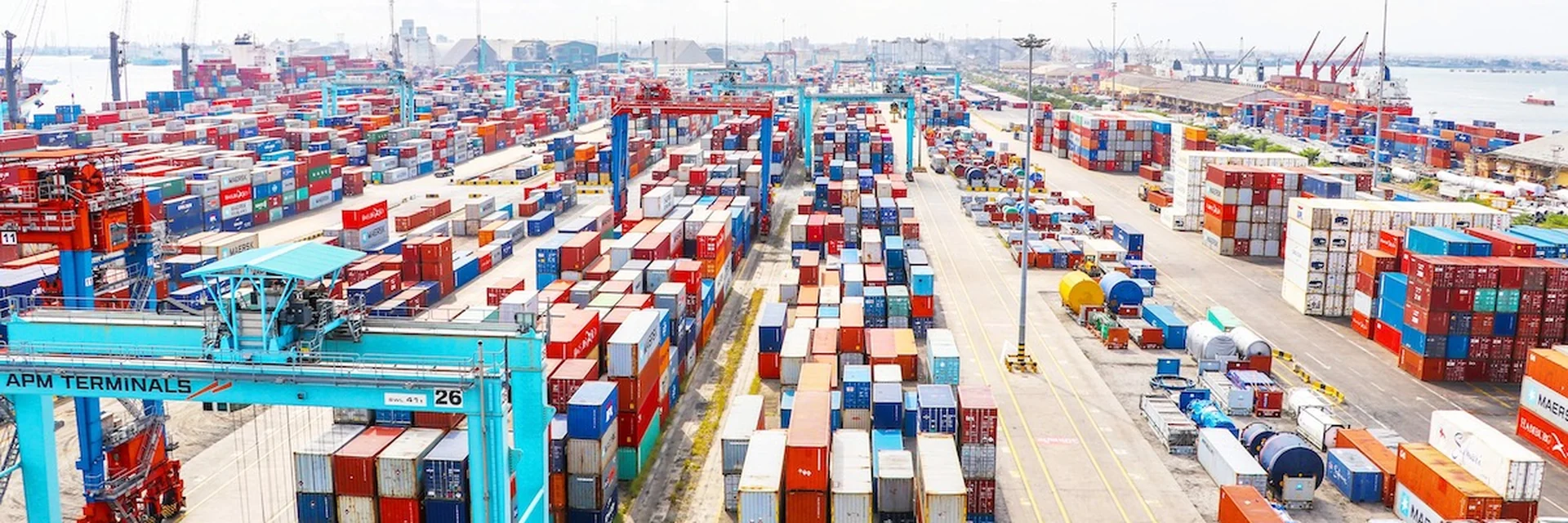
Ports, warehousing, road transport and regional distribution.
Film, music, media, fashion and digital content.
06 / International trade
07 / Pakistan - Nigeria
Bilateral trade expanded sharply in 2024 but remains concentrated in Nigerian energy exports. Pakistan has room to grow higher-value sales in pharmaceuticals, food, textiles, engineering, technology and professional services.
08 / Commercial potential
Expand compliant generics, medical devices, hospital supplies and local distribution partnerships.
Supply rice, processing technology, packaging, cold-chain and farm inputs.
Serve mass-market, institutional, uniform and private-label demand.
Offer tractors, pumps, light machinery, auto parts and maintenance services.
Build payments, software, cybersecurity, BPO and digital-commerce partnerships.
Support distributed solar, storage, metering and industrial power solutions.
09 / Practical guidance
Use the Corporate Affairs Commission and confirm foreign-ownership, tax, beneficial-ownership and sector requirements.
Confirm NAFDAC, SON, customs, import documentation and sector licences before shipment or launch.
Plan for FIRS registration, customs valuation, foreign-exchange access, repatriation and transfer-pricing obligations.
Verify registrations, references, distribution reach, warehousing, financial capacity and after-sales capability.
Allow for logistics, power, security, currency movement, payment cycles and differences between federal and state rules.
10 / Official resources
Investment guidance, incentives, facilitation and One Stop Investment Centre services.
Visit official site Trade and industrial policyTrade, industrial, investment and enterprise policy and programmes.
Visit official site Company registrationCompany incorporation, business names and beneficial-ownership filings.
Visit official site Tax administrationFederal tax registration, compliance, guidance and online services.
Visit official site Customs and tradeImport and export procedures, tariffs, documentation and customs services.
Visit official site Export developmentNon-oil export development, exporter registration and market information.
Visit official sitePAC market entry support
Economic and demographic figures reproduce the supplied PAC profile and retain their stated periods. Officeholders, diplomatic presence and official links were reviewed on 28 August 2026. Statistics and regulations change; verify current information before making commercial decisions.